
A Complete Guide to Smart Home Hubs, Connected Devices and Home Automation
Smart home technology is changing how we manage our homes. From controlling lighting and heating to monitoring security and automating everyday routines, connected devices can make modern living more convenient.
However, as more smart devices are introduced, managing everything through separate apps can become complicated.
This is where a smart home hub can make a difference.
A smart home hub connects compatible devices, allowing them to communicate and work together through a central system. Whether you’re starting with a few smart lights or planning a fully connected property, understanding how smart home hubs work can help you make the right choice.
What Is a Smart Home Hub?
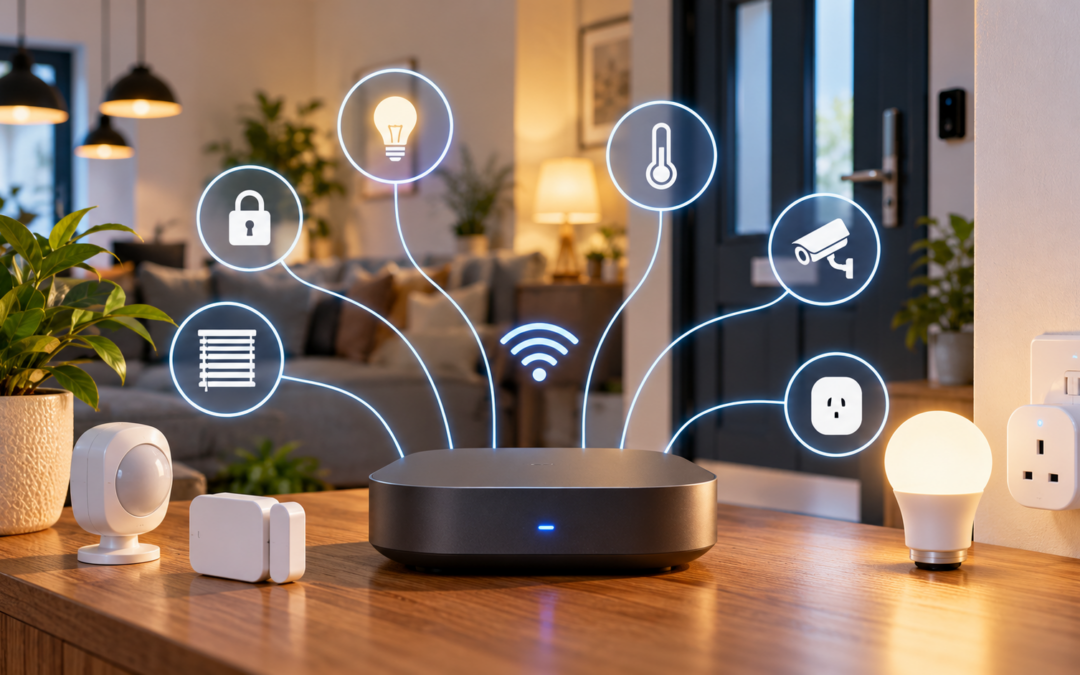
A smart home hub is a central device that connects, manages and automates compatible smart home products, including lights, sensors, thermostats, smart plugs and security devices. It allows connected products to communicate and work together as part of a single smart home system.
Many hubs use wireless technologies such as Zigbee, Z-Wave, Thread or Wi-Fi to communicate with compatible accessories.
Once connected, devices can be managed through a smartphone app, voice assistant or automated routine.
For example, a smart home hub could automatically switch on hallway lighting when a motion sensor detects movement or adjust compatible heating controls according to a programmed schedule.
At Smart & Secure, you’ll find a wide selection of hub-based smart home systems designed to connect and automate devices throughout your property.
How Does a Smart Home Hub Work?
A smart home hub works by communicating with connected devices and coordinating their actions.
Rather than every product operating independently, the hub provides a central platform for controlling compatible equipment.
The process generally involves five stages:
- Device connection: Compatible smart home products are paired with the hub using a supported communication protocol.
- Central management: Connected devices are organised through an associated app or control platform.
- Monitoring: Sensors report information such as movement, temperature or whether a door is open.
- Automation: The hub processes programmed rules and triggers actions when certain conditions are met.
- Remote control: Where supported, users can manage their smart home through a smartphone or compatible voice assistant.
For example, a door sensor could detect when someone enters a room, prompting the hub to activate compatible lighting.
Modern smart home hubs can also support local automation, allowing certain routines to continue operating without an active internet connection.
What Is the Difference Between a Smart Home Hub and a Smart Device?
Although the terms are sometimes confused, smart home hubs and individual smart devices perform different functions.
A smart device carries out a specific task, such as switching on a light, measuring temperature or detecting movement.
A smart home hub connects and coordinates compatible devices so they can operate together.
| Feature | Smart Home Hub | Individual Smart Device |
|---|---|---|
| Primary function | Connects and coordinates devices | Performs a specific task |
| Examples | Zigbee hub, Matter controller | Smart bulb, sensor, smart plug |
| Automation | Coordinates multiple devices | May offer limited independent automation |
| Connectivity | Supports specific communication protocols | Uses its own supported connection type |
| Control | Manages compatible products centrally | Controls an individual device or group |
Not every smart device requires a dedicated hub. Some Wi-Fi products connect directly to a home network and operate through their manufacturer’s app.
However, a dedicated hub can offer additional functionality when building a more comprehensive smart home system.
What Are the Benefits of Using a Smart Home Hub?
Centralised Smart Home Control
One of the biggest advantages of a smart home hub is the ability to manage compatible products from one central platform.
Instead of switching between separate apps for lighting, heating and security, users can organise devices into rooms, groups and automated routines.
For example, a single evening routine could dim the lights, adjust compatible heating controls and activate selected security settings.
More Advanced Home Automation
Smart home hubs allow connected devices to respond automatically to events.
For example, you could create an automation that switches on a light when movement is detected after sunset.
Other routines might adjust heating when a room becomes unoccupied or send a notification when a window is opened.
These automations can improve convenience and reduce the need for manual adjustments.
Improved Connectivity
Many smart home hubs support low-power wireless protocols designed specifically for connected devices.
Zigbee and Thread networks can use compatible mains-powered devices to relay signals, potentially extending network coverage throughout a property.
This can be useful in larger homes where sensors and other accessories are positioned across multiple rooms.
Reduced Reliance on Cloud Services
Some modern hubs process supported automations locally.
This means certain routines may continue functioning when an internet connection is unavailable.
However, remote access, cloud integrations and some notifications may still require internet connectivity.
Easier Smart Home Expansion
A hub-based system can provide a foundation for expanding your smart home.
You might begin with lighting and motion sensors before introducing heating controls, smart plugs or additional security devices.
Choosing a suitable hub from the beginning can make future upgrades easier.
What Types of Smart Home Hubs Are Available?
Different smart home hubs support different technologies and device ecosystems.
Zigbee Smart Home Hubs
Zigbee is a low-power wireless communication protocol commonly used by smart sensors, lighting and other connected devices.
Zigbee hubs create a dedicated network for compatible products, reducing the need for every accessory to connect directly to Wi-Fi.
These systems are particularly popular for home automation involving motion sensors, door sensors, temperature sensors and smart switches.
You can explore compatible options within the Smart & Secure hub-based smart home range.
Matter and Thread Smart Home Hubs
Matter is a smart home connectivity standard designed to improve interoperability between compatible products from different manufacturers.
Thread is a low-power wireless networking technology that can be used by Matter-enabled devices.
A compatible Matter controller can help bring supported products into the same smart home ecosystem.
However, Matter compatibility does not automatically guarantee that every feature of every connected device will be available.
Specialist Smart Home Hubs
Some hubs are designed for particular product categories or manufacturer ecosystems.
For example, certain smart home systems focus on automated blinds, curtains, lighting or home security.
These specialist hubs may provide advanced functions for supported products, making them useful when building a system around a particular type of automation.
Do You Need a Smart Home Hub?
Not every smart home requires a dedicated hub.
If you only want to control a single Wi-Fi smart plug or light bulb, you may be able to operate it directly through a smartphone app.
However, a smart home hub becomes more useful when you want multiple devices to communicate and work together.
A hub may be worth considering if you want to:
- Connect several smart home sensors and accessories.
- Create automated lighting and heating routines.
- Integrate compatible devices from different manufacturers.
- Improve control over larger smart home installations.
- Use Zigbee, Thread or other hub-dependent products.
- Build a smart home system that can expand over time.
For a growing smart home, choosing a suitable hub early can simplify future expansion.
What Can You Automate With a Smart Home Hub?
Smart Lighting
A smart home hub can connect compatible lighting products with motion sensors, switches and schedules.
For example, hallway lights could switch on automatically when movement is detected after dark.
Lighting routines can also be configured around waking up, leaving home or going to bed.
Smart Heating
Compatible thermostats and temperature sensors can work together to adjust heating according to schedules or occupancy.
This may help reduce unnecessary heating, although actual energy savings depend on how the system is configured and used.
Home Security
Smart hubs can coordinate door sensors, motion detectors and other security accessories.
For example, a compatible sensor could trigger a notification when a door is opened while an alarm routine is active.
Automated Blinds and Curtains
Compatible smart home hubs can control motorised blinds and curtains according to schedules or environmental conditions.
This allows users to automate window coverings as part of morning, evening or energy-management routines.
How Do You Choose the Right Smart Home Hub?
Before purchasing a smart home hub, consider which devices you already own and which products you may want to add in the future.
Device compatibility: Check that the hub supports the specific products and functions you require.
Wireless protocols: Identify whether your devices use Zigbee, Z-Wave, Thread, Wi-Fi or another communication standard.
Voice assistants: Confirm compatibility with your preferred ecosystem, such as Amazon Alexa, Google Home or Apple Home.
Local automation: Consider whether supported routines can operate without an internet connection.
Expansion: Check device limits, wireless coverage and the availability of compatible accessories.
Choosing a hub based on your intended smart home setup is generally more useful than selecting one solely because it supports the greatest number of protocols.
Frequently Asked Questions About Smart Home Hubs
Does a smart home hub need Wi-Fi?
Not necessarily. Some hubs connect to a router through Ethernet, while others use Wi-Fi. They may then communicate with accessories through Zigbee, Thread or another wireless protocol.
Can a smart home hub work without the internet?
Some hubs can operate supported local automations without an internet connection. However, remote access, cloud integrations and certain notifications may stop working until connectivity is restored.
Can one smart home hub control everything?
Not always. A hub can only control devices and features supported by its hardware, communication protocols and software integrations.
Is a smart home hub the same as Alexa?
No. Alexa is primarily a voice assistant and smart home platform. Certain Alexa-enabled devices also contain built-in smart home hub functionality, but capabilities vary by model.
Are smart home hubs difficult to install?
Many consumer smart home hubs are designed for straightforward installation. Setup usually involves connecting the hub to a power supply and network, installing the associated app and pairing compatible devices.
More advanced installations may require additional configuration.
Build Your Smart Home With Smart & Secure
A smart home hub provides the foundation for a connected home, allowing compatible devices to communicate, automate everyday tasks and work together more effectively.
Whether you’re starting with a few sensors or planning a comprehensive home automation system, selecting the right hub can make managing your devices simpler and more convenient.
At Smart & Secure, you’ll find a wide range of smart home products designed to improve convenience, control and connectivity.
Explore our smart home products and hub-based smart home systems to find a suitable starting point for your connected home.