
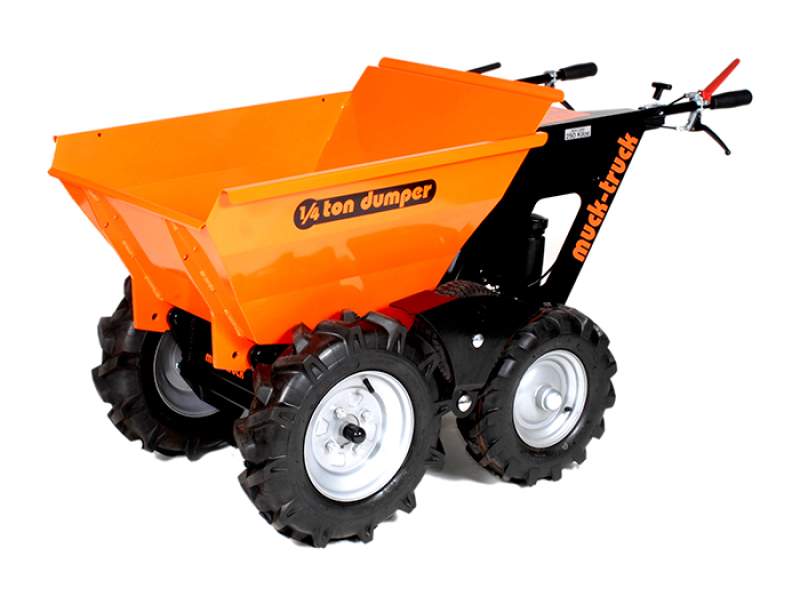
When it comes to moving materials on a building site, garden or landscaping job, the choice between traditional tools and powered equipment can make a huge difference to productivity, safety and cost-efficiency. In this post we explore mini dumper vs wheelbarrow, comparing the two options in clear terms to help you decide which is right for your project, whether you’re hiring machinery from a plant hire company like Digger Hire UK or considering high-quality powered tools such as those produced by Muck-Truck.
The traditional workhorse: the wheelbarrow
The humble wheelbarrow has been used for centuries to transport materials by hand. It’s a small, manually propelled vehicle with one or two wheels and handles that the operator pushes and guides. A wheelbarrow distributes the load between the wheel and the user, making it easier to move heavier or bulkier materials than carrying them manually. Because they’re simple, inexpensive and reliable, wheelbarrows remain a staple on building sites, in gardens and for DIY projects.
Pros of wheelbarrows
-
Very low initial cost and almost no maintenance required.
-
Easy to use for small jobs and lightweight materials.
-
No need for fuel or power, and extremely quiet to operate.
-
Light and easy to store or transport.
Cons of wheelbarrows
-
Limited payload, usually around 100–150 kg.
-
Requires physical effort, which can lead to fatigue on larger jobs.
-
Slower and less efficient for long distances or uneven terrain.
Powered performance: the mini dumper
Mini dumpers are compact, motorised machines designed for transporting heavier loads with far less physical strain. These machines can be wheeled or tracked and often feature powered drive systems and tipping skips for effortless unloading. Brands such as Muck-Truck manufacture robust mini dumpers capable of carrying significant loads while remaining compact enough for tight access areas.
Pros of mini dumpers
-
Substantially higher payload capacity, often several hundred kilograms.
-
Motorised operation greatly reduces manual labour.
-
Excellent performance on rough, sloped or muddy terrain.
-
Can dramatically increase speed and efficiency on site.
Cons of mini dumpers
-
Higher upfront purchase cost or hire fee.
-
Requires some basic training or familiarisation to operate safely.
-
Larger than a wheelbarrow, though still relatively compact.
Direct comparison: mini dumper vs wheelbarrow
| Feature | Mini Dumper | Wheelbarrow |
|---|---|---|
| Payload capacity | Very high — ideal for heavy loads | Low to moderate |
| Effort required | Motorised, minimal strain | Manual, physically demanding |
| Speed & efficiency | Fast, fewer trips | Slower, multiple trips needed |
| Terrain adaptability | Excellent on all terrain types | Best on flat, even ground |
| Cost | Higher cost or hire rate | Very inexpensive |
| Training | Some required | None required |
The comparison shows a clear distinction: wheelbarrows excel in simplicity and low cost, while mini dumpers shine in efficiency, load capacity and ease of use for more demanding tasks.
When to choose which
Choose a wheelbarrow when:
-
The job is small and involves light loads.
-
Budget is limited or you only need a simple tool.
-
You need maximum portability for tight spaces.
Choose a mini dumper when:
-
You’re moving heavy or bulky materials.
-
The terrain is uneven, sloped or muddy.
-
You want faster productivity and reduced physical effort.
For medium to large projects, such as moving soil, gravel, concrete rubble or bulk materials for groundwork or landscaping, hiring a mini dumper from a company like Digger Hire UK can significantly speed up the workflow and reduce fatigue.
Final thoughts
Comparing mini dumper vs wheelbarrow highlights that both tools have their strengths. For small DIY tasks, the wheelbarrow remains a cost-effective and reliable option. However, for professional projects or any job involving heavy loads, a mini dumper offers clear advantages in productivity, safety and overall efficiency.
Before choosing, consider the amount of material you need to move, the type of terrain you’re working on and how much physical effort you’re prepared to put in. Selecting the right tool will save time, reduce strain and help your project run far more smoothly.